Power Outage Survival: Heat, Light, and Food
Stay warm, lit and fed when the power cuts out: the simple home plan behind the video.
Watch the full video walkthroughThe lights go out on a winter night and the house starts cooling by the hour. The furnace is silent. Your phone is at 20%, and that is the last map, the last text, the last clock. By morning you can see your breath, and the tap is the next thing you stop trusting.
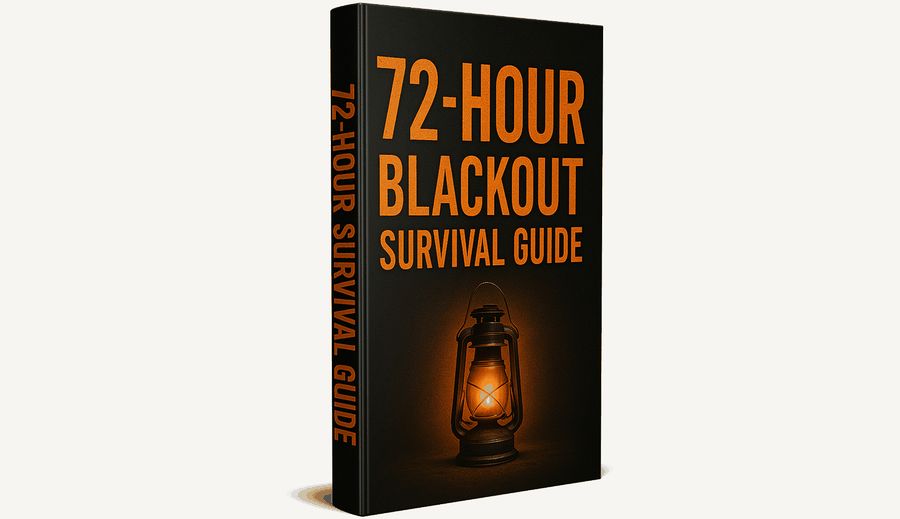
Power outage survival is the plan you make before that night, so when the street goes dark you already know your next move. Blackout Protocol is the written system from a winter storm in Erie: heat that runs on simple materials instead of gas or the grid, water when the pumps stop, real food that keeps on a shelf, light and a way to cook, plus how the guide says you can shield a few devices if a pulse ever hits. Step by step, with every material named.
Keep one room warm while the house cools
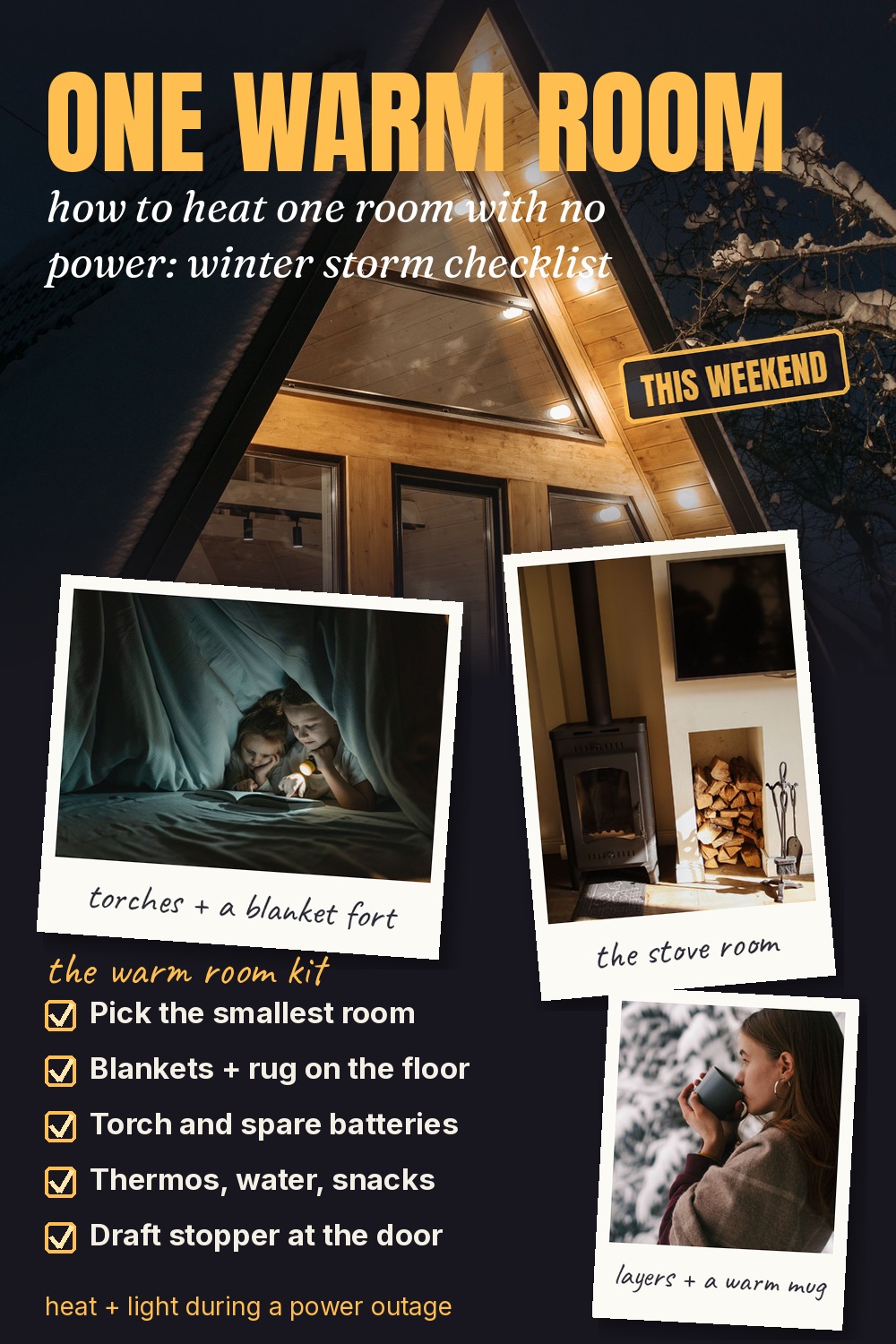
That first night, you only need to win one room: the one you’re standing in, dropping a degree at a time, with a child asking for something warm. A gas furnace still needs power for the blower and the control board, so when the grid goes, the heat goes with it. The guide’s fix is heat that runs on its own: simple, renewable materials you can find nearby, the same idea as a wood stove that runs on what you split in summer.
The first move is the small one. Close the spare rooms, pick one living space, and gather everyone in it. The 72-hour bonus is the quick sheet for those first hours: lock in heat, food, and water before the panic, and the first five moves that put your household ahead of the crowd. Then the protocol carries you through the hours after that.
Keep a light on after the phone dies
By the time the screen hits 3%, the outage map is gone and so is the flashlight in your pocket. The house is down to a dying candle, which is where the Erie story in the guide turns: one window down the street still glowing, warm and steady, the only light on the block.
The fix in the book is light you can count on, and a way to cook a full meal, built to keep going when the grid fails. The guide covers metal lanterns and how to shield them so they keep working after a pulse. Know the setup and a small kit goes a long way. The device-shielding bonus covers radios, flashlights, a solar charger, even medical gear, in minutes, with materials the guide says you already own, plus the one mistake that leaves most Faraday cages useless. A charged 12-volt pack is a great spare for tonight. The protocol makes that spare count even if the outage is bigger than a storm.
Eat well from the shelf while the fridge thaws
The fridge stopped when the lights did. Open it once, take what you’ll eat tonight, and keep it shut. From night two, dinner comes from the cupboard, and that’s exactly the part the guide plans for.
The food section is real food stored the old way, in jars and cans you fill yourself. The food-security bonus names foods that last for years with no freezer and no chemicals, a rotating pantry that keeps itself full, and a small-space plan. Cook it on the same off-grid heat that’s already warming the room. The guide is built for the outage itself: what you eat on night two, and how you stocked it before the storm.
Have water when the tap goes quiet
City pipes go dry once the pumps stop. The guide is blunt about it: most people only notice when the faucet coughs, and three days is about as long as anyone lasts with nothing to drink. In Erie, it was melted snow in a pot. You can do much better.
The fix is water stored before the outage, then a way to purify it that keeps working long after tablets and filters would run out. Barrels lined up, every drop ready in advance. If a freeze is likely, drip the taps and open the cabinet doors under sinks on outside walls, so a cold night stays a cold night instead of a pipe bill. The protocol is the lasting supply.
A plan beats a panic trip for gear
The store run happens after the lights fail, when everyone else is in the same aisle. You pay panic prices for a heater that’s unsafe indoors, fuel that’s hard to store, and a lantern with one set of batteries. The guide works in the opposite order: materials you gather ahead of time, steps in a set order, a one-room system you already understand. It’s cheaper than buying the outage in one night, and the method stays with you for the next storm. A home-defense bonus sits beside it, with low-cost deterrents that work with the power off, so the one lit house on the block stays a safe one.

Three months from now the phone can die and the room still has a plan: one warm space, a light that runs on its own, jars you can eat, water you filled on purpose. Tonight, close the spare rooms and put a flashlight where your hand already goes in the dark.
That winter night ends differently if the glow is yours. Heat, light, food, and water, decided before the furnace goes quiet.
Watch the full video walkthrough.
FAQ
What is power outage survival in this guide?
Blackout Protocol is a step-by-step system for off-grid heat, water you store and purify, real food that keeps on a shelf, light and cooking off the grid, and device shielding. A 72-hour quick guide comes with it.
Can I run a gas furnace on a generator?
Often yes, if the generator covers running watts and startup surge, and you connect through a transfer switch or interlock. The furnace-watts guide below has the numbers. The protocol gives you heat that works with or without that hookup.
What do you get with Blackout Protocol?
The core guide plus four bonuses: a 72-hour blackout sheet, an EMP device-shielding handbook, food-security notes, and a silent home-defense guide.
Related on this site
One-room heat plan for a 24–72 hour outage
Furnace watts and startup surge
When the tap stops during a power outage
Additional guides
Stay aware when the lights are out