How to heat a house during a power outage
Most winter outages in the U.S. last hours to a couple of days, not a season. You do not have to heat every room. You pick one zone, cut heat loss, keep people and pets in that zone, and refuse indoor combustion that is not rated and vented for it.
This page is that weekend plan. It is not off-grid living and it is not a substitute for a legal generator plus a transfer switch. If the watt math for the furnace works and you already have a legal hookup, use that. If you do not, this is the cheap side of the comparison.
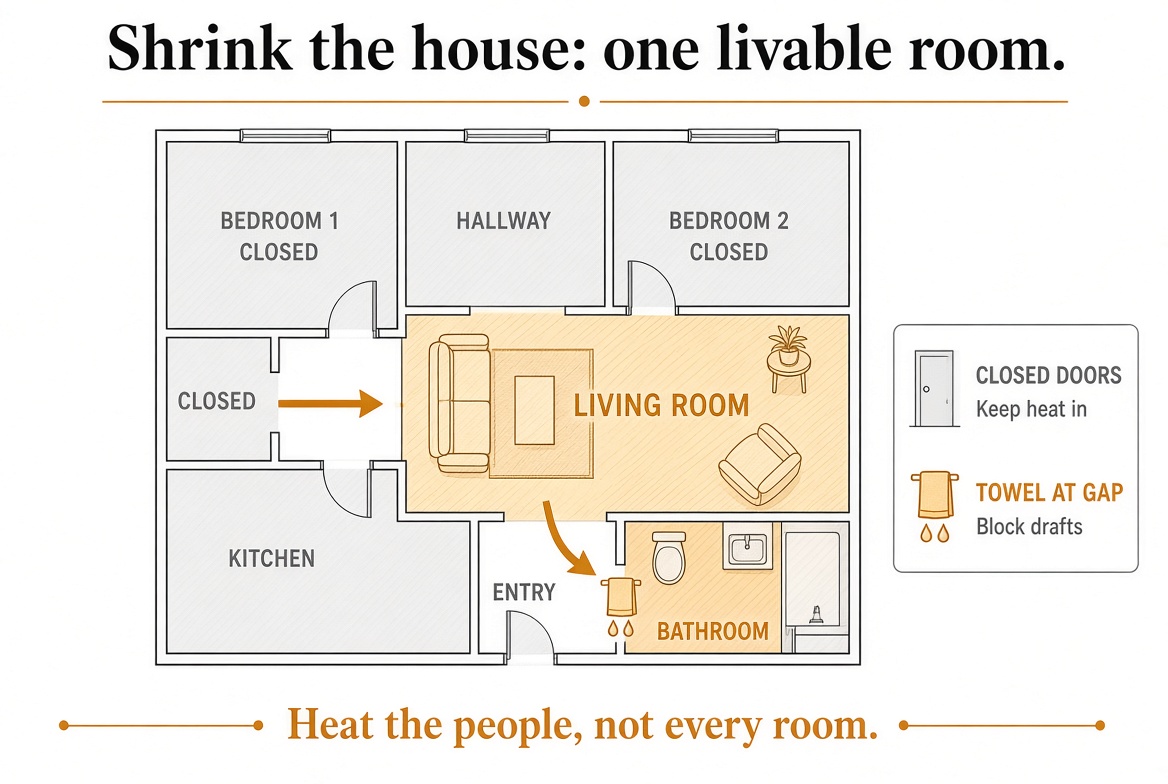
Close unused rooms. Pick one living space plus a bathroom. Shut the doors. Roll towels at the gaps. Pull curtains. You are shrinking the volume you have to keep above dangerously cold, not trying to hold 70°F in the bedrooms.
Layer people, not the whole house. Extra clothes, hats, blankets. Sleep in the same room. Pets too. Body heat in a small space is free and it works.
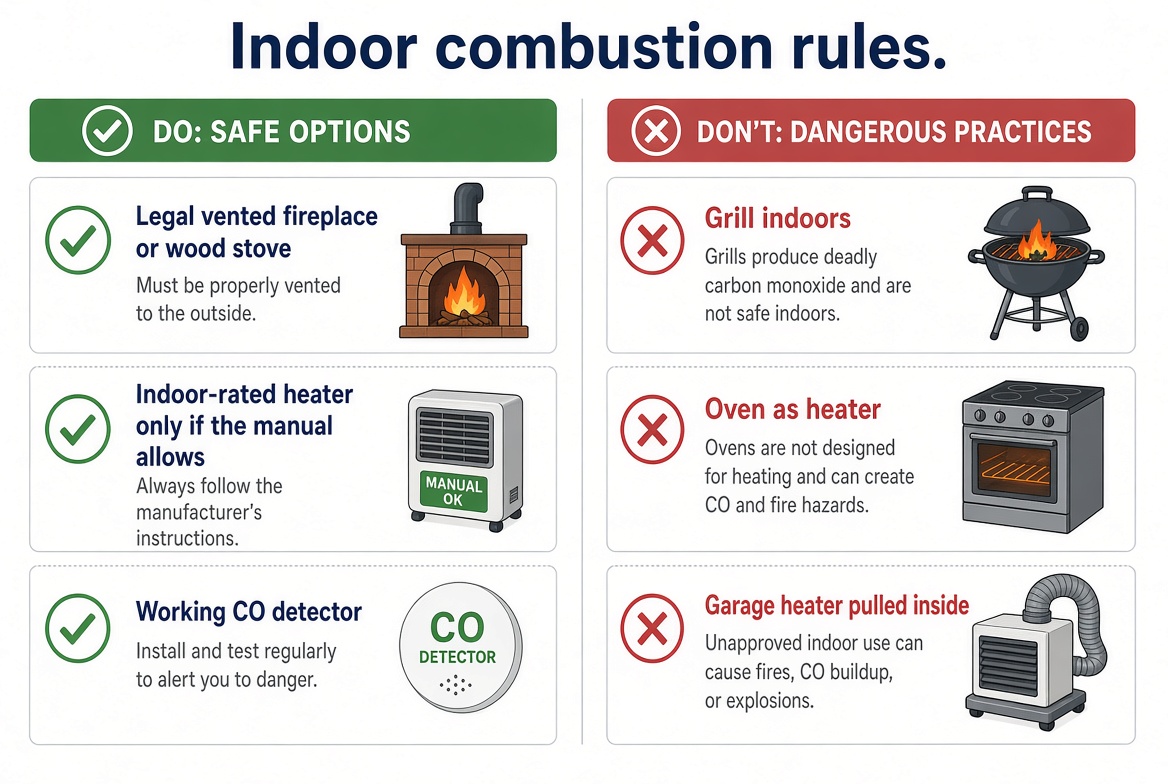
Never use a grill, oven, or garage heater indoors. Carbon monoxide kills in closed rooms. A house that is only cold is still recoverable. A house with CO is not. If you have a detector, put it in the occupied room with fresh batteries. If you do not, do not add any combustion you cannot vent.
If you have a fireplace or wood stove that is legal and vented, use that. Open the damper. Burn dry fuel. Keep a screen on it. If you do not have that setup, do not improvise with a fire pit, a camp stove, or a heater pulled in from the garage. Those are outdoor tools.
Same closed-room setup, held for a weekend. When the furnace is off, you are only fighting drafts. Block them. Extra blankets, sleeping bags, a draft blocker at the door. Layer the floor if it is a slab.
Keep the occupied room above the danger line. People shivering hard, confusion, or wet clothes means you need a different plan or a shelter, not more pride.
Indoor-rated propane heaters only where the manual allows, with a working CO detector and a window cracked if the manual says so. If the heater is not rated for indoor use, it stays outside. Unvented combustion is a trade: some heat, some moisture, some CO risk. Follow the book or do not use it.
A battery power station can run lights and phones. Most cheap stations will not run a furnace blower for long. Treat stored 12-volt as light and charging, not heat. That path is here if you want the battery side:
Drip a faucet if pipes are at risk, especially on exterior walls. Open cabinet doors under sinks on those walls. A drip is for the pipe, not your drinking reserve.
Keep the fridge and freezer closed. A full freezer holds longer than an empty one. You are buying time, not running a restaurant.
If the house will sit well below freezing for a long stretch, you may need to drain lines. Frozen pipes are a repair bill. They are not a reason to bring a grill inside.
A well pump dies with the grid. City pressure may last or it may not. Fill clean containers first if anything still flows. Stored bottles beat a science-fair dew collector in a cold, dry indoor outage.
That full first-hour water plan is here:
When the tap stops during a power outage
If you have a gas furnace and a generator that can cover running watts and startup surge, and you can connect it legally, the furnace can heat more than one room. The watt math is here:
Furnace watts and startup surge
A homemade or small portable unit is still a limited source. Honest limits live here:
If the math fails — electric furnace, undersized inverter, no legal inlet — stay on this page. Do not stall the generator on a load it cannot start.
A portable generator plus a legal hookup is usually four figures. This one-room plan is mostly stuff you already own. If you want the household checklist version — heat, light, fridge, what to do in order — that is Blackout Protocol. It is a paid digital guide, sold through ClickBank. It is a plan, not a machine, and not a licensed electrician.
This page uses an affiliate link. If you buy, we may earn a commission.
Can I heat the whole house this way?
No. The point is one livable room for a short outage. Whole-house heat needs a furnace that still has legal power, or a system built for that load.
Is a space heater the one-room plan?
An electric space heater needs a lot of continuous watts. That is a poor fit for a small generator. Combustion heaters are only as safe as their rating, venting, and CO detection.
How long will pipes last?
It depends on outdoor temperature, wind, insulation, and whether the pipe sits in an exterior wall. There is no single honest hour count. Drip, open cabinets, keep one interior zone warmer.
When do I leave the house?
If people cannot stay warm and dry, if CO is possible, or if you have no safe water and no way to treat it. A weekend plan is not a reason to stay in a dangerous room.
What do you actually get with Blackout Protocol?
A digital household plan sold through ClickBank — written steps and checklists for an outage, not a generator and not a heater in a box.