How to heat a house during a power outage
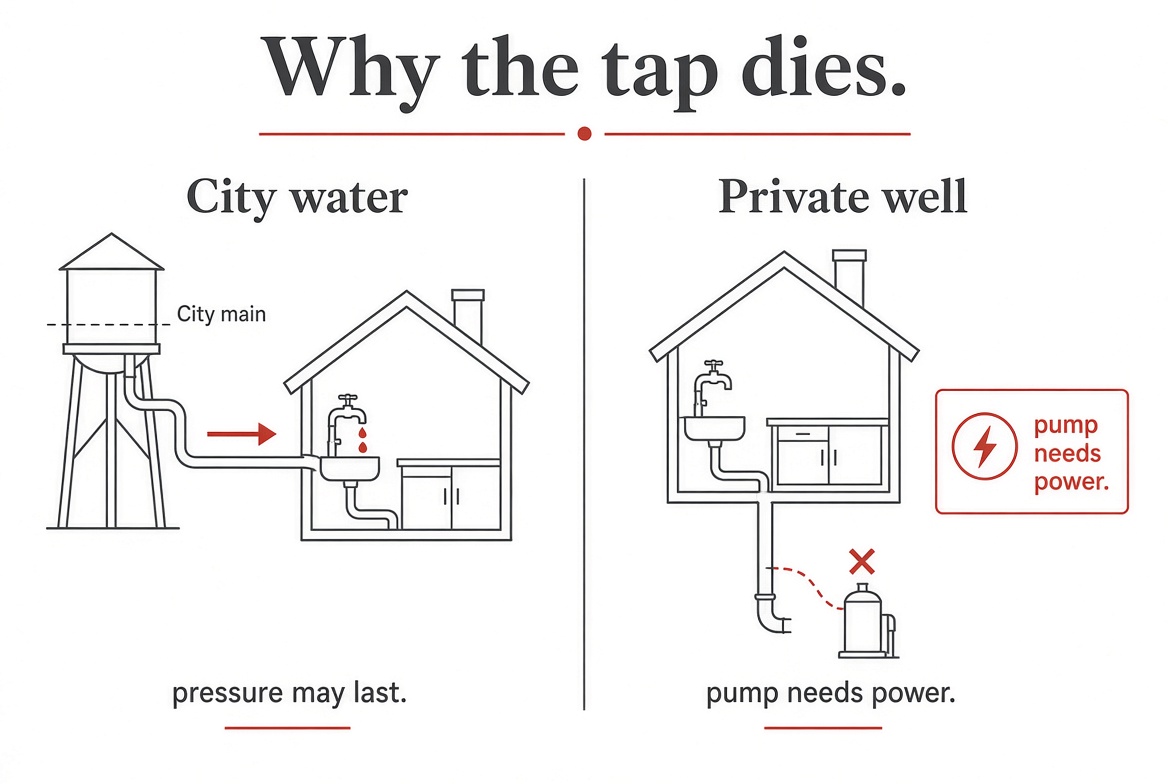
Heat is the first problem people name in a winter outage. Water is the second, and it arrives faster than most households expect. A municipal tap can still run if the plant and the pipes still have pressure. A private well usually does not. The pump needs electricity. When the grid drops, the tap at the kitchen sink can go dry while the well itself is still full.
This page is about that gap: what to do in the first hours, how long stored water actually lasts, why dripping pipes and drinking water are different jobs, and when a written water-from-air plan is worth comparing to stored jugs. It is not a promise that air will replace a well. Humidity still sets the ceiling.
City water often keeps moving for a while. Gravity tanks and remaining pressure can carry a neighborhood through a short outage. That is not a rule. A long cut, a pump station without backup, or a boil-water notice after the lights come back can still leave you without a safe tap.
A well is simpler and worse. The pump is an electric load. No power, no lift. Hand pumps and stored pressure tanks buy a little time. Most modern homes do not have a hand pump. Treat the well as offline until you have a legal generator sized for the pump start, or until the grid returns.
Sump pumps fail the same way. If the basement relies on one, water can rise while the kitchen tap is already dead. That is a different emergency. Do not spend the first hour on a condensation project if the floor is flooding.
Do this before you start collecting dew or running a dehumidifier.
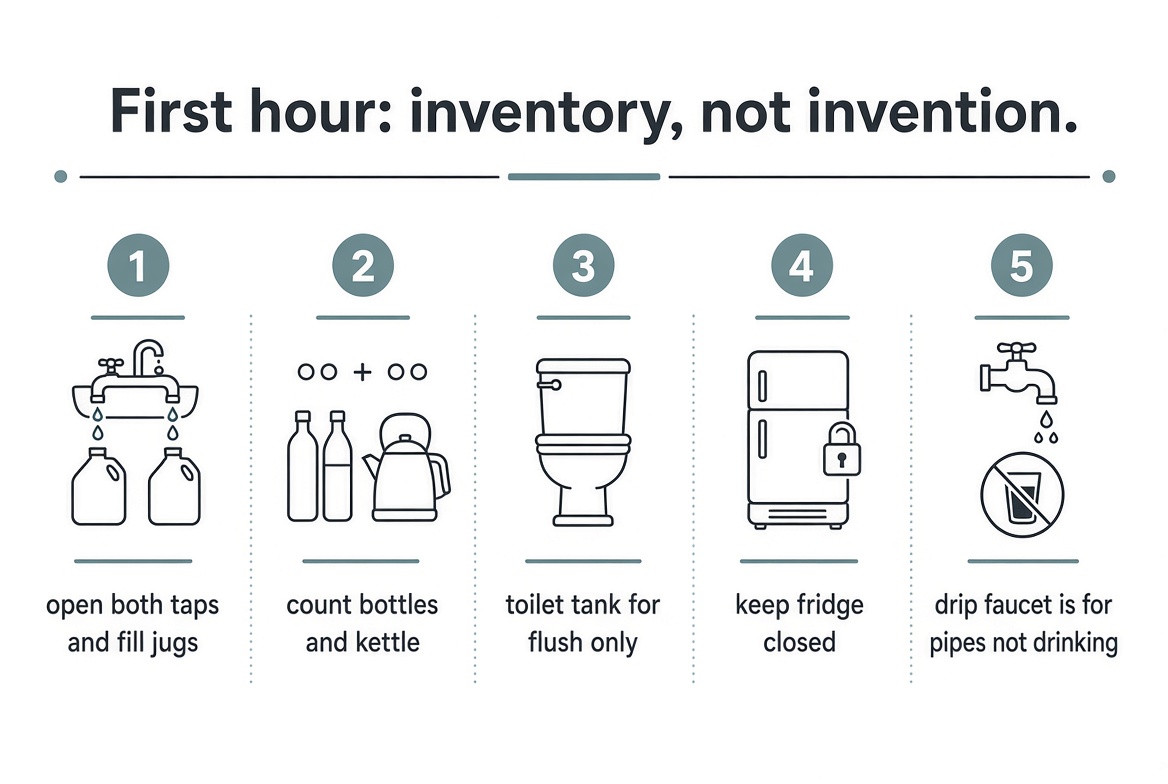
A household of four uses more water than people guess once you count drinking, cooking, brushing teeth, and a conservative flush plan. Plan in gallons, not “we’ll be fine.” Stored water is the first backup. Everything else is a second or third move.
Unopened commercial bottles are the cleanest store. A filled water heater tank is a real reserve if you can drain it without scalding yourself or contaminating the hose. Rain barrels and hose water are not drinking water until treated.
Snow and ice can be melted. That takes heat you may not have if the outage is also a cold-house problem. Melt in a covered pot. Treat before drinking. Dirty snow is not a shortcut.
There is no honest single number for “how many days we last.” It depends on how many people, how strict you are, and whether anyone needs extra water for medicine or a baby. The first-hour inventory is the only number that matters tonight.
Those are three jobs.
Drinking and cooking need the cleanest water you have, then treatment if the source is anything but a sealed bottle. Filter and disinfect. If you would not trust the container, do not drink it.
Pipes need a drip or a drain plan so they do not freeze and split. That water can go down the drain. Do not confuse a drip strategy with a drinking plan.
Hygiene can drop to wet wipes, a basin, and fewer flushes. That stretches stored drinking water. It is not glamorous. It is how short outages stay short.
Air holds moisture. You can condense some of it. A dehumidifier drain is real water and is not automatically safe to drink. A small atmospheric water generator-style build can collect a backup amount in humid air. In dry winter air inside a closed, cold house, yield is often poor and the box still wants power.
That last point matters on this site. An outage is exactly when grid power is gone. An active condenser needs watts. If you do not have a generator or a battery that can spare them, the build sits dark. Passive dew collection needs the right night and the right site. It will not refill a family in a dry, indoor winter outage.
Use water-from-air as a backup skill and a climate-dependent option, not as the first-hour plan. The first-hour plan is stored water and a working tap while pressure lasts.
If you want the process in plain English — humidity limits, household-gear tests, and when a written DIY blueprint is cheaper than a commercial machine — that lives here:
A legal generator plus an interlock can run a well pump or a furnace blower if the watt math works. That is four figures for many homes once you count the unit, fuel, and the licensed hookup. It is hardware.
If you do not want to spend that this week, the low-cost written plan this site already uses for heat, light, and a fridge is Blackout Protocol. It is a paid digital guide, sold through ClickBank. It is checklists and a household plan, not a pump and not a substitute for a licensed electrician.
This page uses an affiliate link. If you buy, we may earn a commission.
A generator is a machine you run. Blackout Protocol is a plan you follow. Neither one makes a well pump legal to backfeed. Neither one creates drinking water from dry winter air. Pick based on money and time this week.
Does a well work during a power outage?
Usually not. The pump needs electricity. A pressure tank may give you a short run of water. After that, the tap stops until power returns or you run a legally connected generator sized for the pump start.
Can I drink water from the water heater?
Many people use it as emergency storage if they can drain it safely into clean containers. Let it cool. Do not drink it if the tank is old, rusty, or you cannot keep the path clean. Treat if you have any doubt.
Should I drip the faucet if I also need drinking water?
Drip to protect pipes in a freeze. That drip is not your drinking reserve. Fill clean jugs first if the tap still runs, then set the drip.
Will a water-from-air box run with no power?
Active builds usually need power for fans and cooling. Passive dew or fog collectors can work without power in the right climate, at much lower yield. A dark, dry, indoor winter outage is a bad site for either.
What do you actually get with Blackout Protocol?
A digital household plan sold through ClickBank — written steps and checklists for an outage, not a generator, not a well pump, and not a water machine in a box.