How to heat a house during a power outage
A gas furnace does not heat without electricity. Gas makes the flame. Electricity runs the inducer, the igniter, the control board, and the blower. When you size a portable generator for heat, you are sizing those electrical parts — especially the few seconds when the blower starts.
This page is the watt math the front page only sketches. It is not a promise that a homemade or hardware-store generator will run the whole house. Read your nameplate. Size for start, then add only what you actually need.
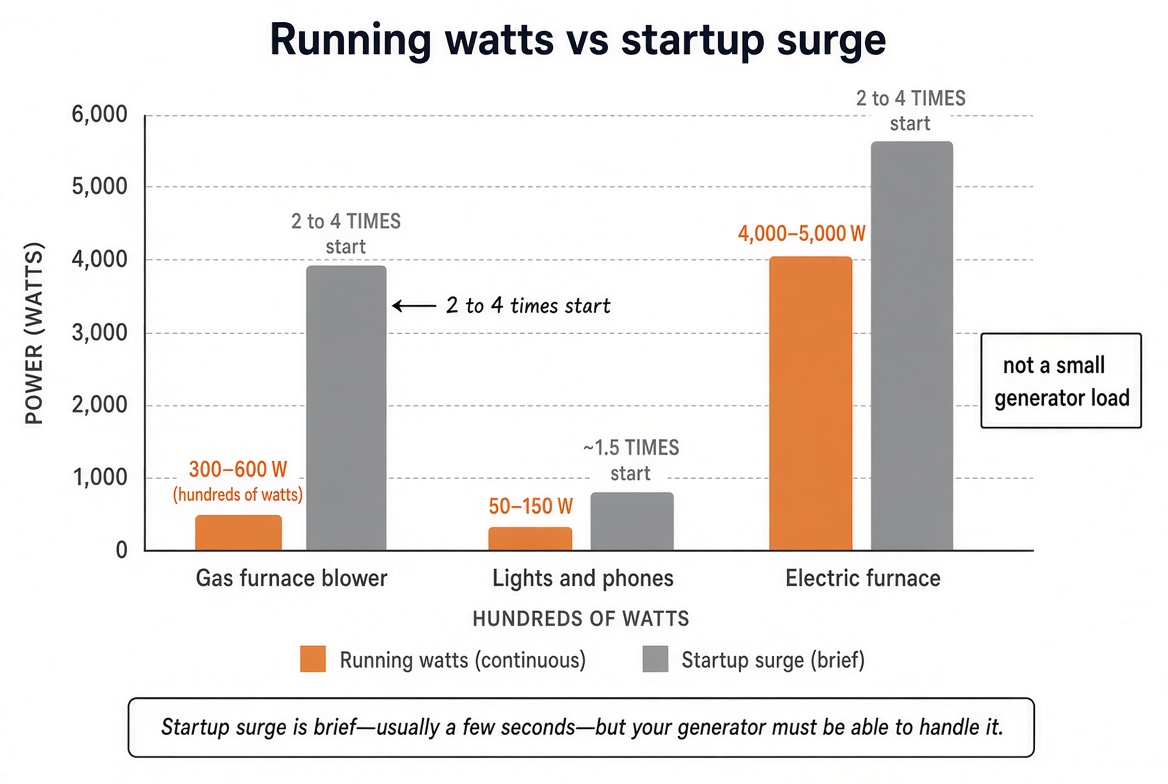
Running watts are what the furnace uses once the blower is spinning. Many gas furnaces land roughly in a few-hundred to about 1,200-watt band for the electrical side. That number is not universal. ECM variable-speed blowers often start easier and run lower than old PSC motors. Oil furnaces sit in a similar band because the burner and blower still need power.
Startup surge is the short spike when the motor kicks. A single-speed blower can pull two to four times running watts for a few seconds. A generator that “looks big enough” on the running number can still stall on that spike. That stall is why people say the furnace “won’t stay on” with a small unit.
Electric furnaces and heat pumps are a different class. An electric furnace is often in the 10,000-watt range and up. A heat-pump compressor also spikes hard at start. A small portable or DIY unit that can cover a gas furnace will not cover those loads. Do not pretend it will.
| Load | What to expect | Notes |
|---|---|---|
| Gas furnace electrical side | Often ~300–1,200 running watts; start much higher | Nameplate wins. ECM vs PSC changes the start. |
| Oil furnace electrical side | Similar band to gas | Burner plus blower still need power. |
| Fridge | Low running watts; high start | Add only after the furnace start is covered. |
| Lights and phone charging | Small | Easy. Not the sizing problem. |
| Well pump | Often a hard start | Do not stack on a unit already at the furnace limit. |
| Electric furnace / heat pump | Far above a small portable | Skip the furnace. Use the one-room plan. |
These are bands from typical residential gear, not a substitute for the sticker on your unit. If the numbers do not work, skip the furnace and keep one room livable. Running a furnace wrong is worse than a cold night in one room.
Look on the furnace cabinet or in the manual for volts and amps, or for a listed watt or FLA figure. Watts ≈ volts × amps on a simple single-phase listing. Then apply a start multiplier for the blower type you have. If you cannot find the plate, do not guess from a neighbor’s house.
Floating-neutral portable generators can confuse flame-sensing on some furnaces. The unit lights, then shuts down. That is a real failure mode. Stop guessing and get an HVAC tech or electrician involved.
Lights, phone charging, and furnace controls are the easy loads. The blower start is the hard load. A fridge start on top of a furnace start is how small inverters stall.
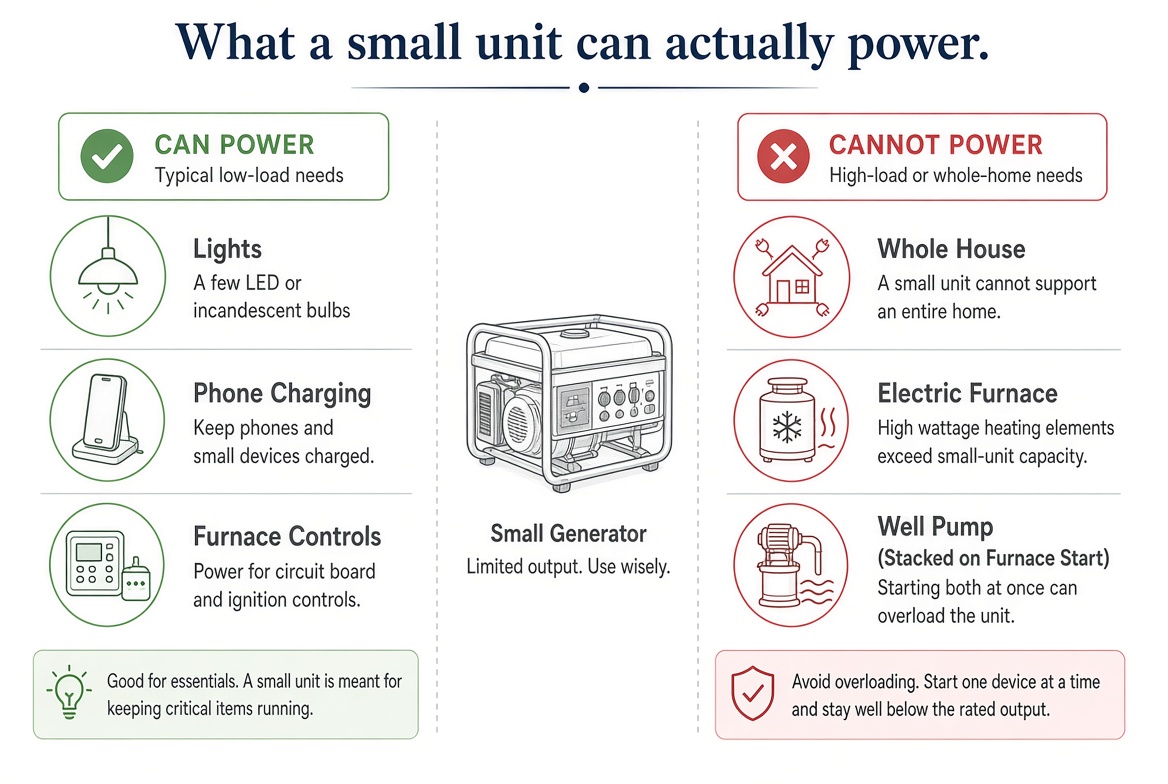
A homemade or small portable generator is a limited electrical source. It is not a whole-house plant. Honest limits and connection rules live here:
Homemade generator — what a small DIY unit can actually do
A 12-volt battery pack is for lights and small DC loads, not a furnace blower. If you are looking at stored 12V as a backup slice, that path is here:
Use a transfer switch or an interlock installed to code. Do not backfeed a wall outlet. Set the generator outside, dry, and away from windows. Carbon monoxide from a generator is the same problem as an indoor grill.
A cheap DIY plan and a hardware-store generator do not replace that licensed work. If you cannot connect it legally, the watt table does not matter.
Most winter outages are hours to a couple of days. One closed room, extra clothes, a legal vented fireplace if you have one, and no indoor combustion that is not rated for it — that plan is on the front page.
Water is a separate job when the well pump dies with the furnace. That page is here:
When the tap stops during a power outage
If you do not want to buy a generator and a legal hookup this week, the low-cost written plan this site uses for heat, light, and a fridge is Blackout Protocol. It is a paid digital guide, sold through ClickBank. It is checklists, not a furnace and not a licensed interlock.
This page uses an affiliate link. If you buy, we may earn a commission.
How many watts does a gas furnace need?
Often hundreds of running watts, commonly in a few-hundred to about 1,200-watt band, with a much higher start. Use the nameplate. Size for start, then add fridge and lights only if those still fit.
Why does a generator run lights but stall the furnace?
Lights are a small running load. The blower start is a short spike. If the generator’s surge rating is below that spike, it stalls even if the running number looked fine.
Can I run the furnace and the well at once?
Only if the unit covers both starts. Most small portables cannot. Pick heat or water for that machine, not both.
Will a battery station run the furnace?
Most cheap stations will not run a full blower for long. Controls can be a small load. The blower is not. Check output and watt-hours against start and run. Do not daisy-chain hope.
What do you actually get with Blackout Protocol?
A digital household plan sold through ClickBank — written steps and checklists for an outage, not a generator and not a transfer switch.